The market playbook
The Seven-Stage Market Cycle
The seven steps of a manufactured momentum run — and how to recognize them.
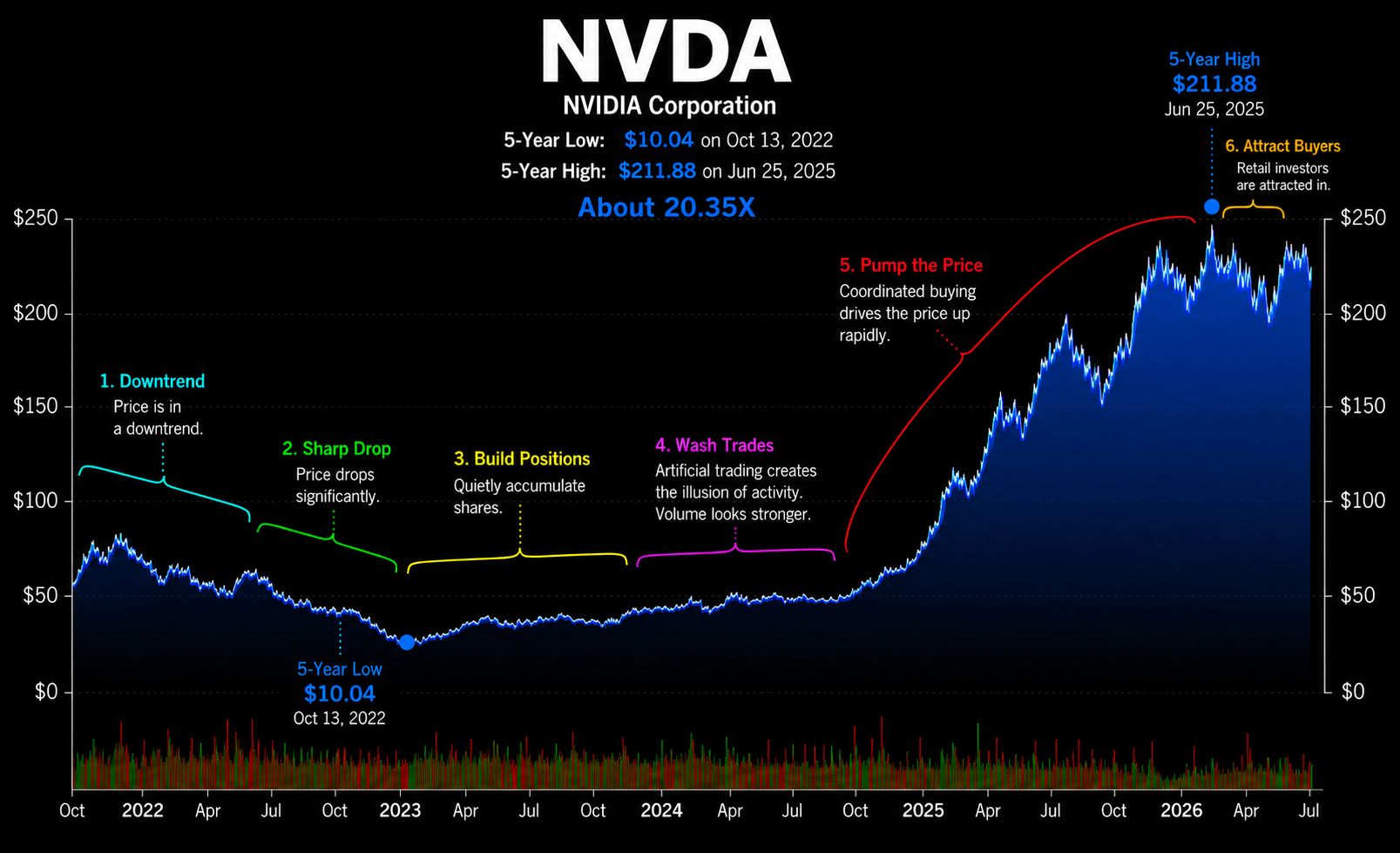
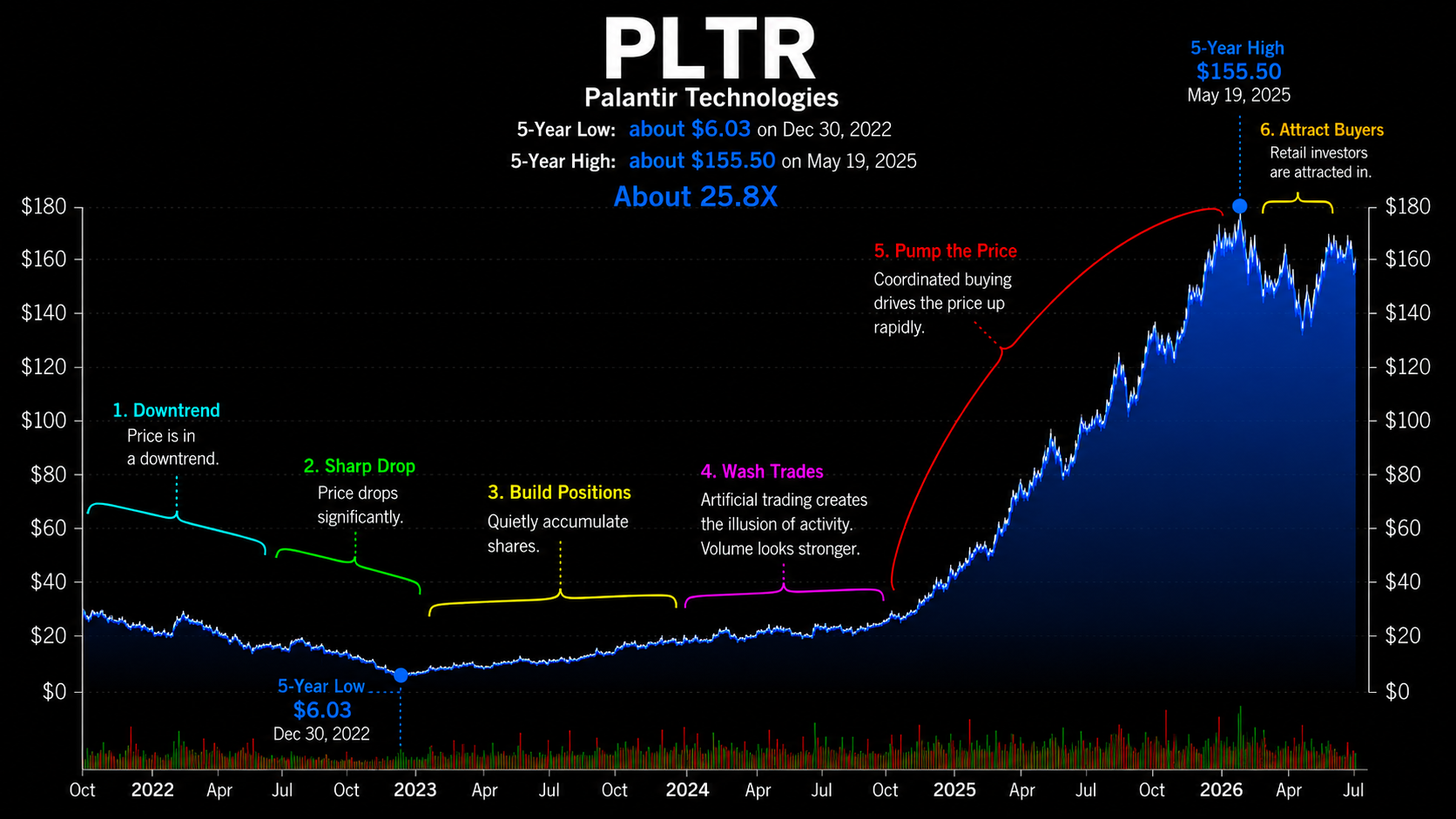
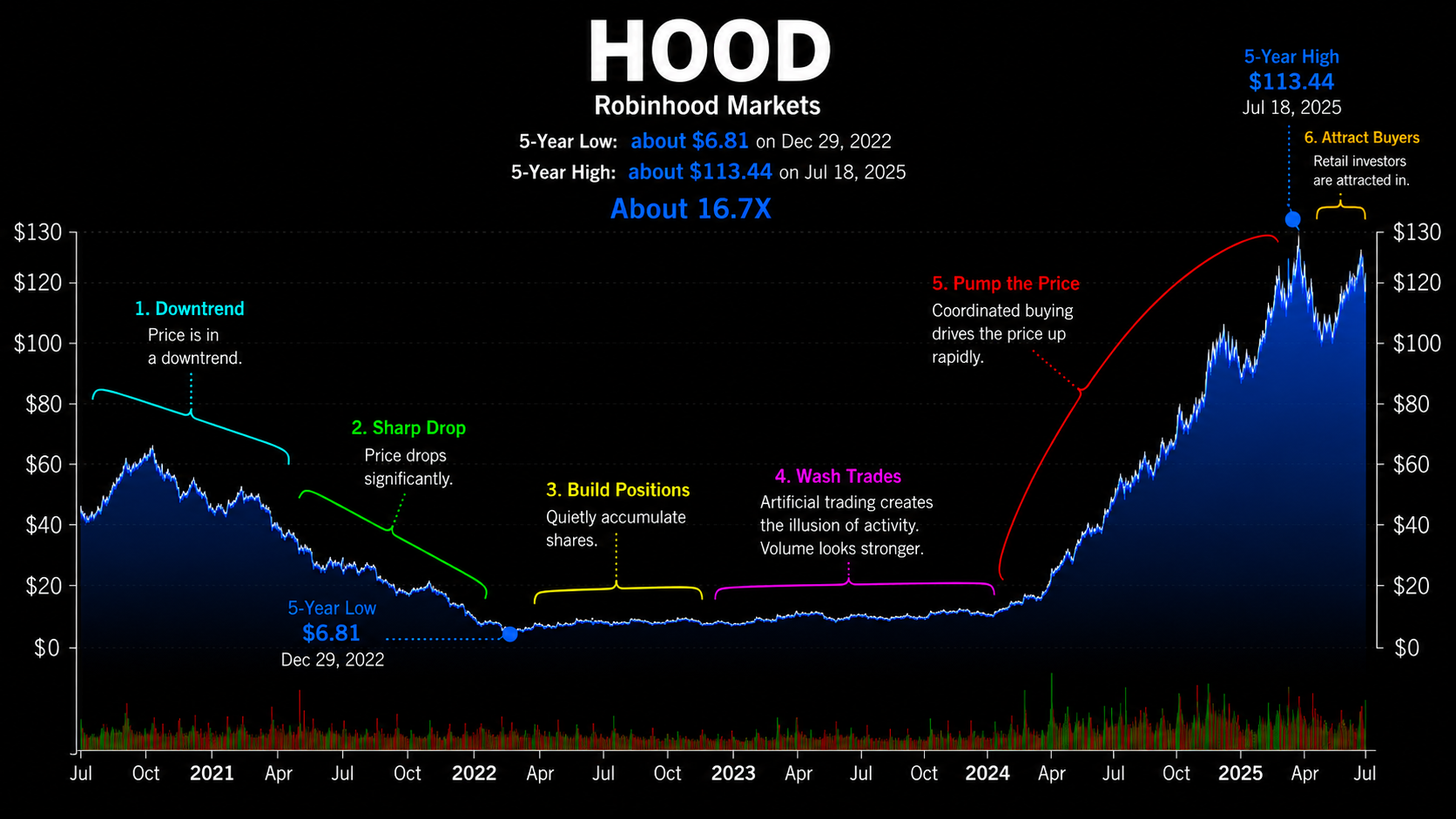
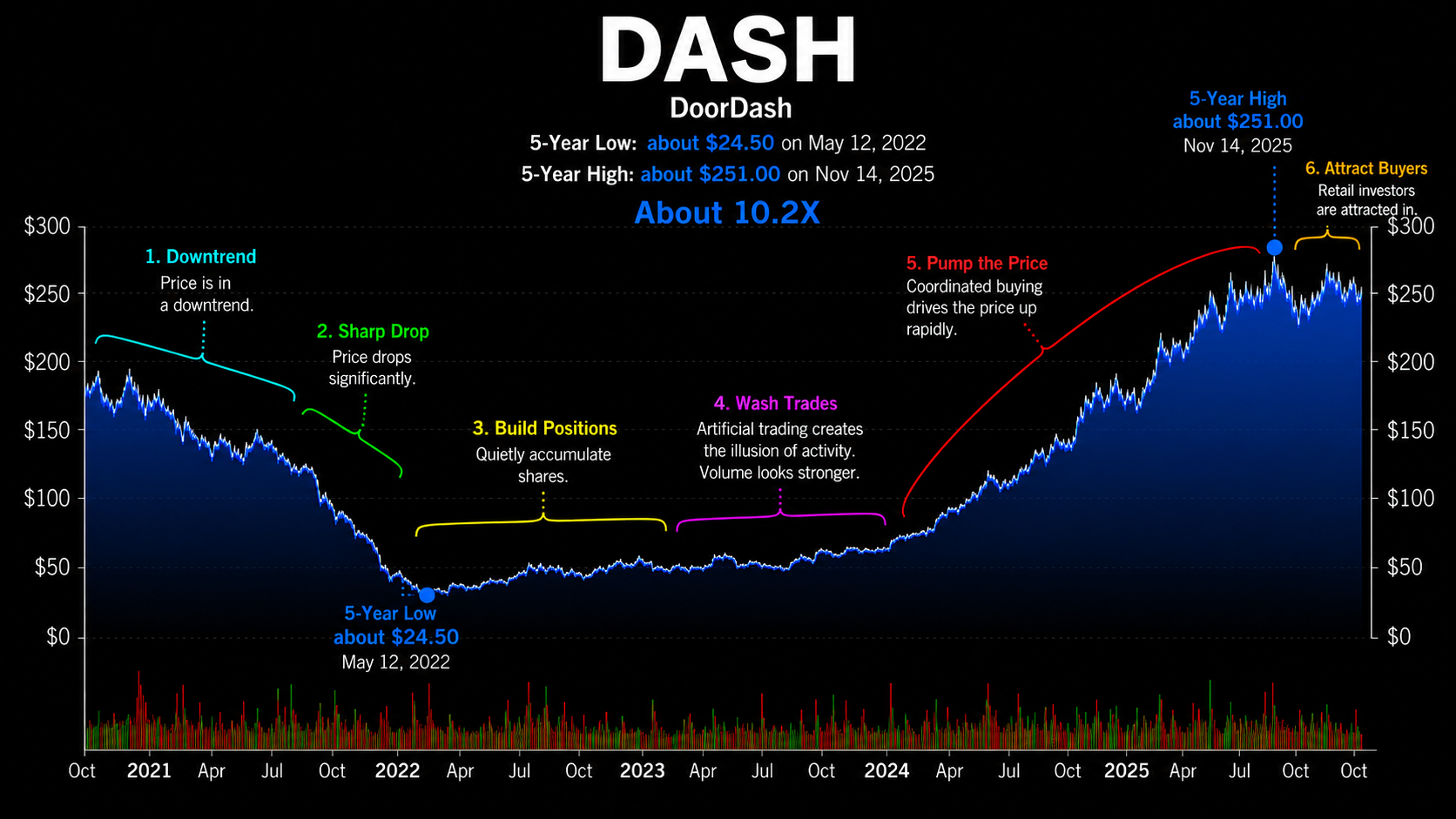
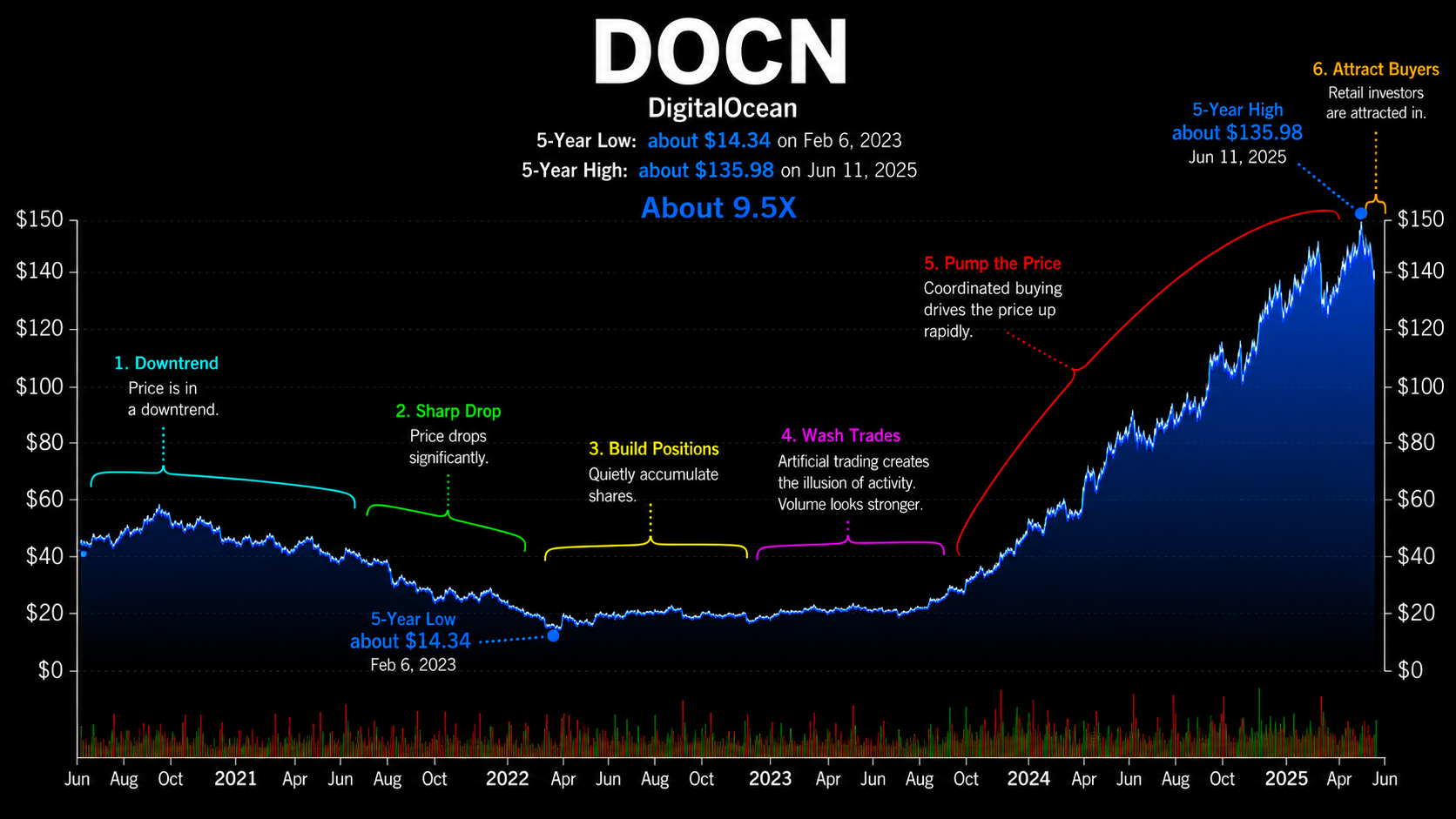
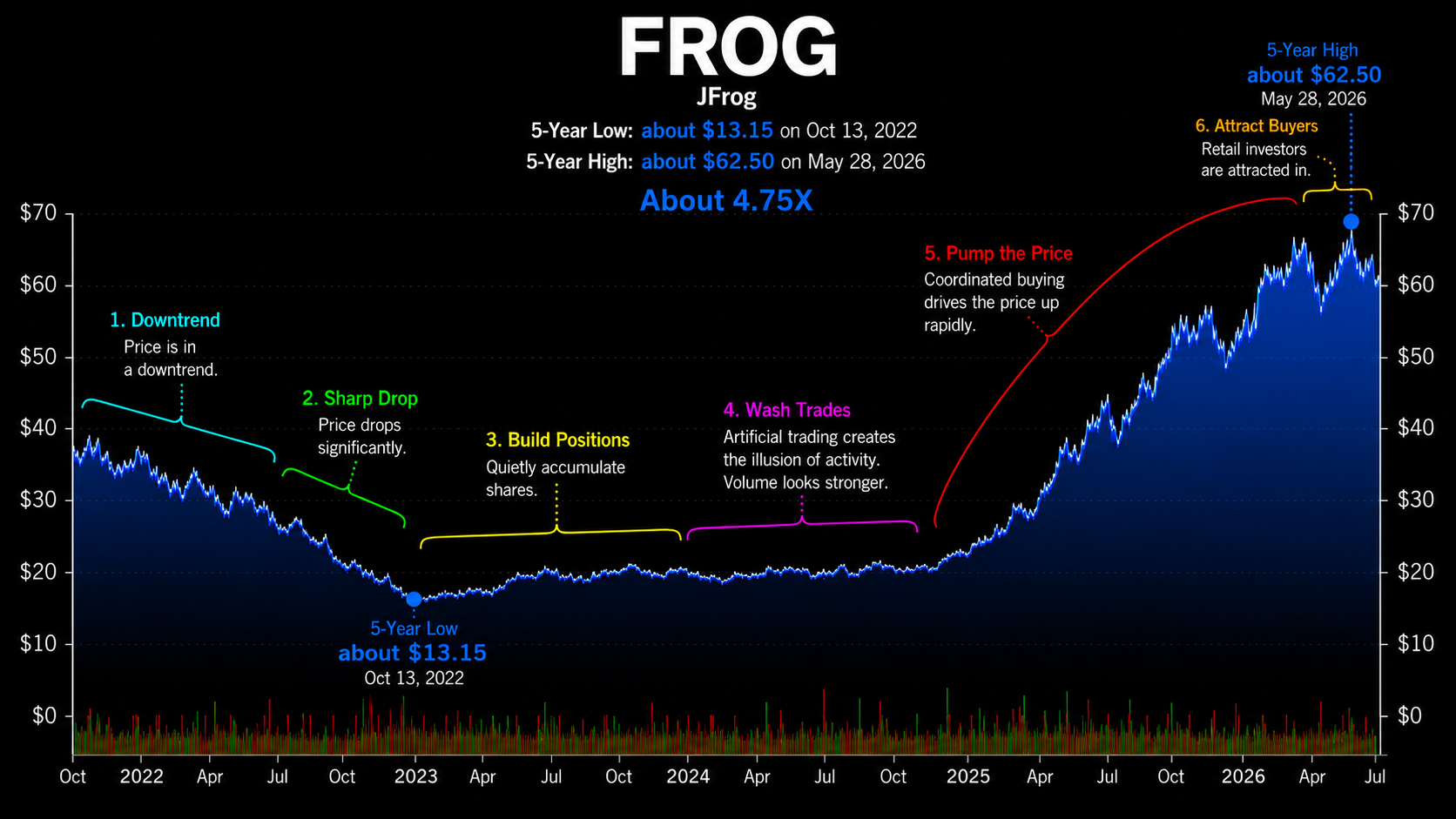
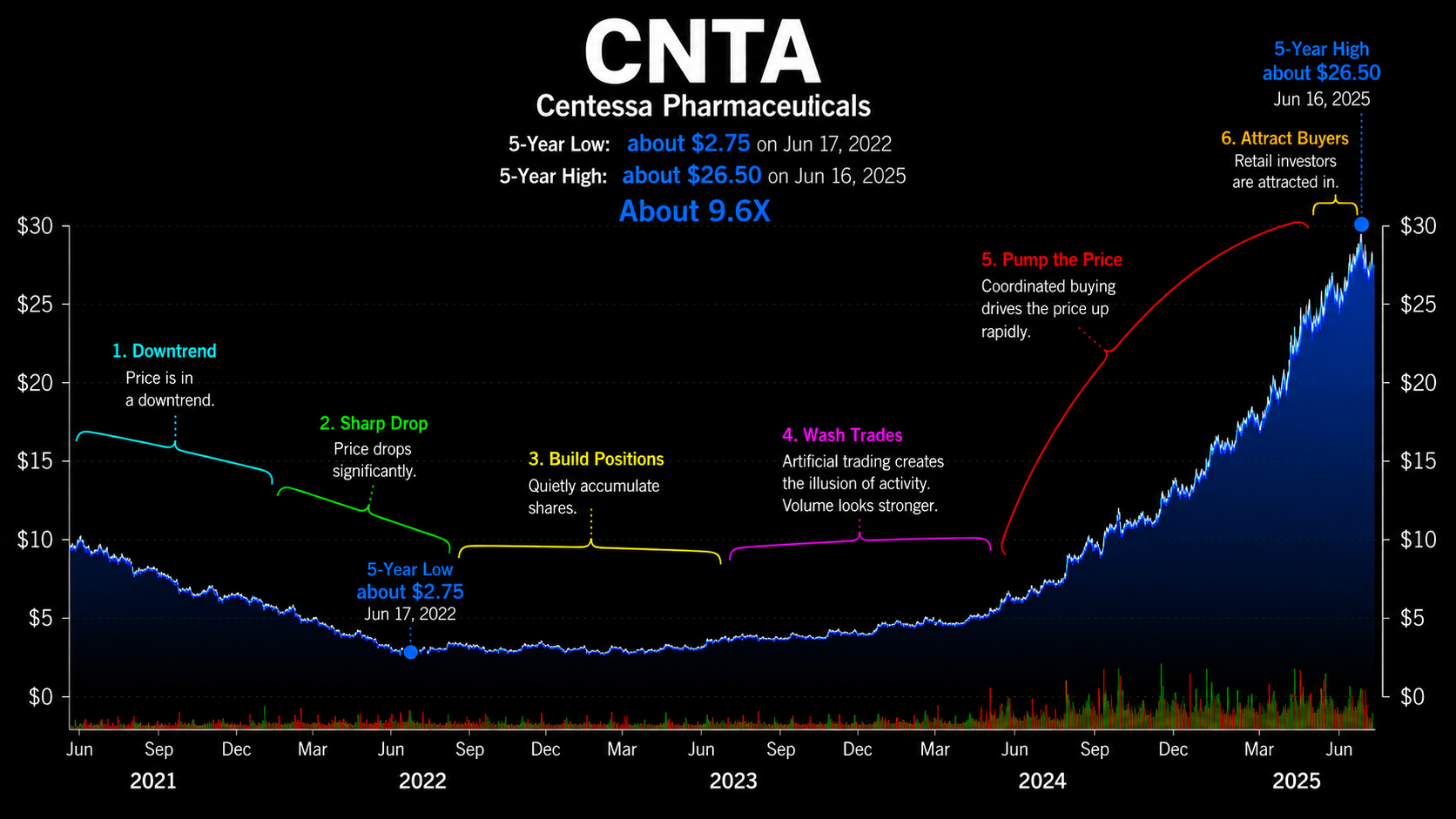
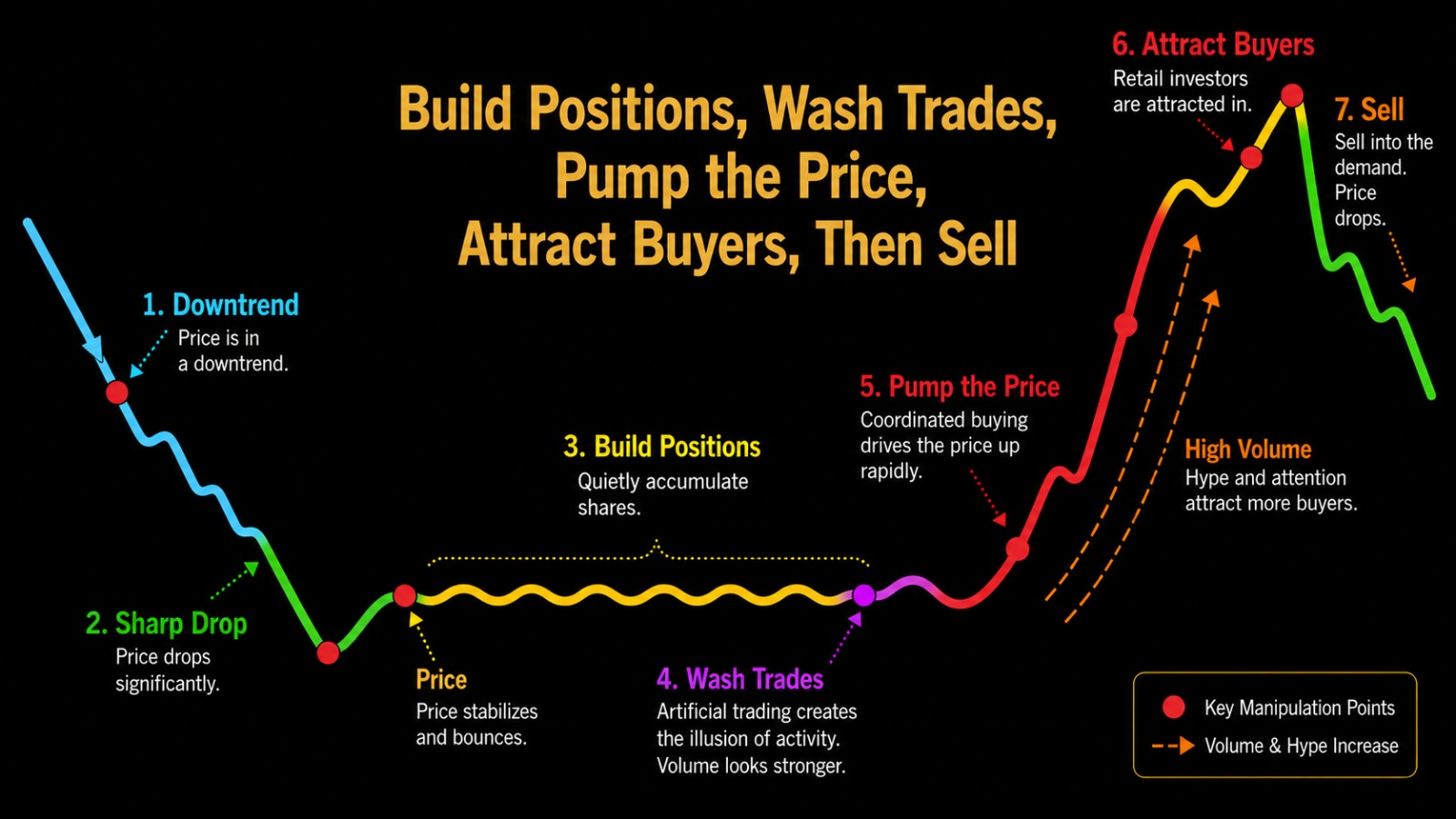
Many big momentum moves follow the same script: fear is manufactured, shares are quietly accumulated, activity is faked, price is pumped, latecomers are lured in, and the whole thing is sold into their demand. The chart below maps those seven steps.
The point isn't to run this playbook — parts of it (like wash trading) are outright illegal. It's to recognize which stage a stock may be in, so you don't end up as the exit liquidity at the top.
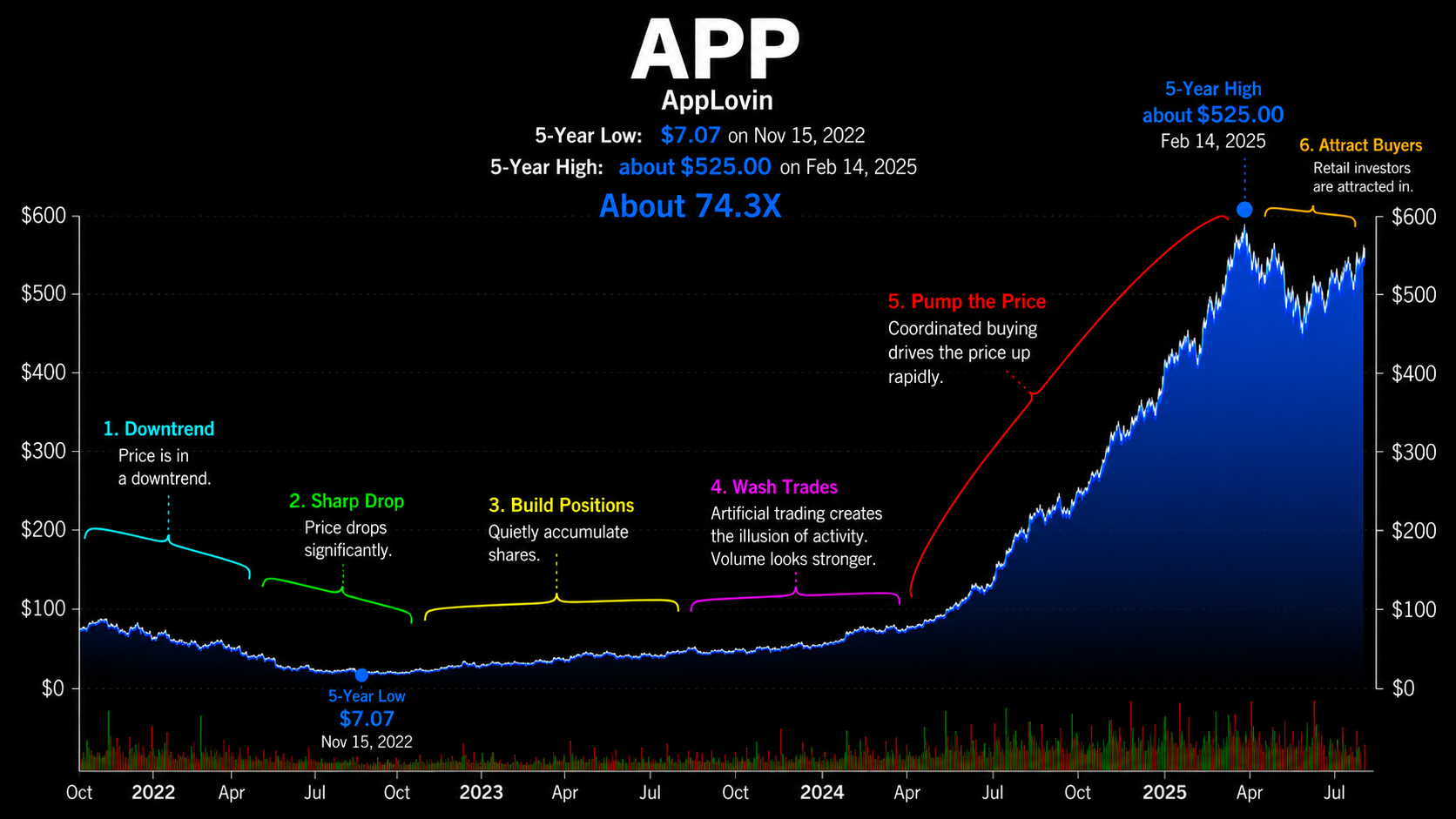
Take a close look at the chart above: you can trace all seven stages in a single real name. In the video below, AppLovin CEO Adam Foroughi describes surviving the stock's 92% drawdown — a first-hand look at what the early, fearful stages of this cycle feel like from the inside, and why the best opportunities so often hide where sentiment is worst.
Stage 1 · Downtrend
The setup begins with a stock stuck in a sustained downtrend. Week after week it grinds lower, coverage turns negative, and holders slowly lose conviction.
The steady decline does quiet work: the longer it lasts, the more tired sellers it produces and the cheaper the supply becomes. Bearish narratives dominate, and confidence deteriorates.
Stage 2 · Sharp Drop
Then comes a final, accelerated leg down — capitulation. Price drops significantly and quickly.
Stop-loss orders trigger, leveraged holders face margin calls, and the last impatient sellers give up near the lows. Fear peaks, and a large slice of the float changes hands cheaply — exactly when informed buyers want it.
Stage 3 · Build Positions
With sellers exhausted, price stabilizes and bounces. This is quiet accumulation: larger players patiently absorb shares inside a relatively narrow range instead of chasing price higher.
It looks dull and uneventful to the public — but beneath the surface, ownership is shifting from emotional sellers to patient hands. Constructive chart bases quietly form here: higher lows and tightening ranges.
Stage 4 · Wash Trades
To make the stock look alive, artificial trading creates the illusion of activity. Coordinated back-and-forth trades inflate volume without any real change of ownership.
Suddenly the name is “in play”: volume looks stronger, scanners flag it, and traders who ignored it start paying attention. (Wash trading is illegal market manipulation — this is a stage to recognize, not to run.)
Stage 5 · Pump the Price
Now the real markup begins. Coordinated buying drives the price up rapidly, often paired with promotion and a positive spin on the story.
Technical breakouts pull in momentum algorithms and trend-following funds. Short sellers rush to cover, adding still more buying pressure to an already rising market.
Stage 6 · Attract Buyers
Rising price plus high volume is the bait. Hype and media attention draw retail investors in — many convinced the move will continue indefinitely and afraid of missing out.
Attention and volume peak here. This surge of eager demand is exactly what the early accumulators have been waiting for.
Stage 7 · Sell
Finally, the operators sell into the demand. Early buyers quietly distribute their shares into the aggressive, euphoric buying at the top.
Once their selling outweighs fresh demand, price rolls over and drops — leaving late entrants holding the decline. Enthusiasm fades, and the cycle eventually resets to begin again.